Buckle Up and Bask: Why Drive-Through Light Shows Are Taking Over the American Holiday Season
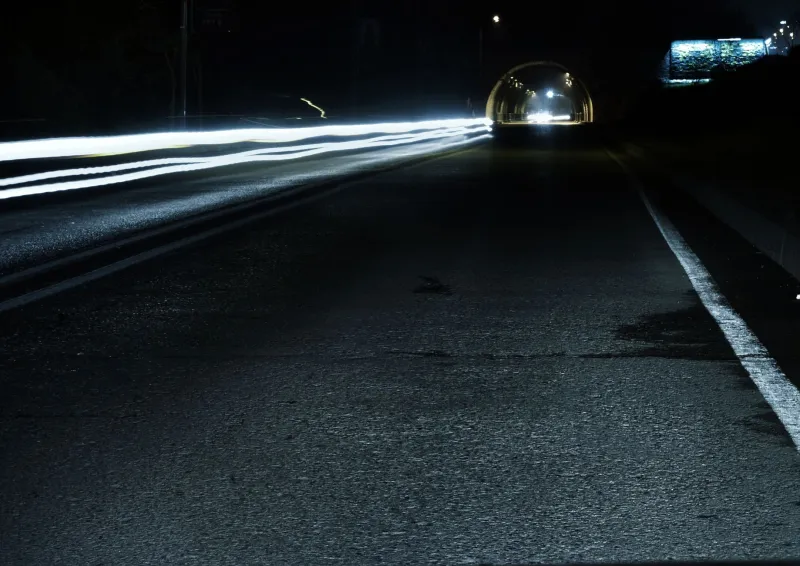
There's something a little absurd — in the best possible way — about sitting in your minivan, sipping lukewarm hot chocolate, while a half-mile of synchronized LED snowflakes pulses to "Carol of the Bells" just outside your windshield. And yet, for tens of millions of Americans, that exact experience has become the highlight of the holiday season.
Drive-through light shows are everywhere right now. From converted county fairgrounds in rural Ohio to the manicured grounds of major theme parks in Florida and California, the format has exploded over the past decade into a legitimate cultural phenomenon. It's one part road trip, one part gallery opening, and one part neighborhood Christmas light crawl — scaled up to something genuinely spectacular.
So how did sitting in your car become one of America's favorite ways to experience illuminated art? The answer is a mix of clever design thinking, accessible technology, and a deep, enduring American love affair with the open road.
The Car as the Frame
What makes drive-through light shows so distinct from other immersive light experiences is the format itself. Your vehicle isn't just transportation — it's the viewing platform, the personal space, and in a lot of ways, the frame through which the art is experienced.
Designers working in this space talk a lot about the "windshield perspective." Unlike a walk-through installation where visitors can look in any direction and move at their own pace, a drive-through show has to deliver impact in a relatively narrow field of view, often within just a few seconds of any given display. That's a real creative constraint — and creative teams have gotten remarkably good at working within it.
At events like the Wild Lights show at the Kansas City Zoo or the hugely popular Magical Winter Lights in Houston, the design teams spend months mapping out exactly what a driver will see at each point along the route. Scale matters enormously. Displays need to be tall enough to register through a windshield, wide enough to fill peripheral vision, and timed precisely enough to land their visual punch before the car moves on.
"You're essentially designing a film sequence that people drive through," one lighting designer working the seasonal circuit put it. "Every 30 feet is a new scene, and you've got maybe 10 seconds to tell that story."
The Tech Behind the Twinkle
The raw ingredient of most drive-through light shows is the humble LED — billions and billions of them. But calling these shows a collection of Christmas lights is like calling the Grand Canyon a ditch. The technology layered on top of basic LED displays has transformed the medium into something far more sophisticated.
Programmable LED systems now allow entire displays to shift color, rhythm, and pattern in real time, synced to music broadcasts over FM radio (a signature move of the format — tune to 98.7 and suddenly the lights are dancing to your car stereo). Projection mapping has made its way into larger productions, wrapping trees, barns, and even moving floats in animated imagery that seems to defy physics. Some shows have started incorporating laser systems and fiber optics to add texture and depth that pure LED arrays can't quite achieve.
The logistics behind all of it are staggering. A mid-sized drive-through show might use upward of two million individual lights, with miles of cable buried under the ground or threaded through temporary structures. The setup crews — often starting work in September for a Thanksgiving launch — are part electrician, part sculptor, part event coordinator.
Small Towns, Big Glow
One of the most interesting things about the drive-through light show boom is where it's happening. Yes, you'll find polished productions at major destinations — Silver Dollar City in Branson, Missouri does a holiday light show that draws visitors from across the Midwest, and Stone Mountain Park outside Atlanta runs one of the Southeast's most-attended seasonal events. But a huge slice of the action is playing out in smaller communities that have discovered the format as both a creative outlet and an economic engine.
In places like Minot, North Dakota or Dothan, Alabama, a well-executed drive-through light show can pull visitors from a 100-mile radius, filling local motels and restaurants during what would otherwise be a slow stretch of the year. Tourism boards have taken notice. Several states now actively promote their drive-through light trail circuits the same way they'd market a wine country route or a fall foliage drive.
For the communities running these events, the creative stakes are real. Word travels fast — TikTok videos of a particularly stunning display can send traffic surging overnight, while a lackluster show gets quietly avoided the following year. There's genuine artistic pride wrapped up in the competition to out-illuminate the next county over.
The Pandemic Spark
It's worth acknowledging the moment that truly ignited the current boom. When COVID-19 shut down indoor gatherings in late 2020, drive-through experiences became one of the only safe ways to do anything communal. Light show operators who had been running modest seasonal events suddenly found themselves overwhelmed with demand. New shows launched almost overnight, filling the void left by canceled indoor holiday events.
What nobody fully anticipated was that the appetite wouldn't fade when indoor events came back. Families who discovered drive-through light shows during the pandemic kept coming back. The format had earned its place not as a consolation prize but as a genuinely preferred experience — intimate enough for a family night out, spectacular enough to feel like an event.
What Keeps People Coming Back
Ask regular attendees what they love about drive-through light shows and you'll hear a lot of the same things: the warmth, the ease, the feeling of being cocooned in your own little world while something beautiful unfolds around you. There's no jostling crowd, no cold wind biting at your face, no trying to keep track of restless kids in a dark field. It's immersive art on your terms, at your pace, with your people.
There's also something quietly profound about the format's democratic accessibility. A drive-through light show doesn't ask you to have a sophisticated relationship with art or design. It just asks you to show up, roll down the window a little, and let the light in.
And in that simplicity, it delivers something that the most elaborate gallery installation sometimes struggles to — genuine wonder. The kind that makes a seven-year-old press their face against the glass and a sixty-year-old go quiet for a moment, both of them caught in the same warm glow.
That's the real magic of the drive-through light show. It doesn't matter how many LEDs are involved or how sophisticated the programming is. What it's really doing is turning an ordinary winter night into something you'll remember — one slow, glowing mile at a time.