Lit Lives: Inside the Obsessive, Quietly Thriving World of American Light Art Collectors
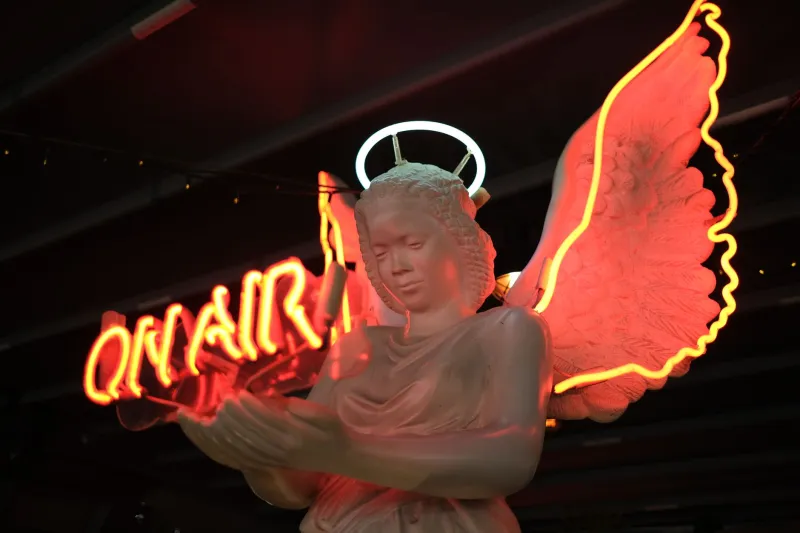
Somewhere in a converted garage in Tucson, Arizona, a retired electrician named Dale Fitch is carefully wrapping a three-foot neon sculpture in moving blankets before sliding it into the back of his truck. He's driving six hours to a pop-up market in Albuquerque, where he'll trade it for a custom LED panel made by a 24-year-old art school dropout in Portland who he's never met in person but has known online for four years. No gallery. No auction house. No middleman. Just two people who fell hard for illuminated art and figured out their own way to make it work.
This is what the underground light art scene looks like in America right now — and it's a lot bigger, and a lot more organized, than most people realize.
The Collectors Nobody's Writing About
When most people think about collecting light art, they picture wealthy patrons snapping up James Turrell pieces or bidding on Olafur Eliasson works at Christie's. And sure, that world exists. But below that rarefied atmosphere, there's a sprawling, scrappy, deeply passionate subculture of everyday Americans who are buying, trading, commissioning, and sometimes just outright making their own illuminated art — and doing it almost entirely off the mainstream radar.
These aren't people with unlimited budgets or connections to blue-chip galleries. They're nurses, software engineers, teachers, and tradespeople who got hooked on the specific feeling of living with light as art. Some started with vintage neon signs salvaged from old diners or shuttered motels. Others fell into the world through DIY LED projects that spiraled into something far more serious. A surprising number came up through the rave and festival scenes, where immersive light environments aren't decoration — they're the whole point.
What unites them is an almost evangelical conviction that light-based art deserves to be owned, lived with, and loved — not just experienced at a ticketed event and forgotten.
Finding Each Other in the Dark
The infrastructure holding this community together is genuinely fascinating. There's no single hub, no official organization, no governing body. Instead, the scene runs on a loose network of online forums, Discord servers, regional Facebook groups, and a handful of subreddits where members post work-in-progress shots, ask for sourcing advice, and arrange trades.
One of the more active gathering points is a Discord server called Neon & Beyond, which started in 2019 as a place for vintage neon enthusiasts and has since expanded to cover everything from plasma lamps to fiber optic installations. At last count, it had over 4,000 members across the US, with particularly dense clusters in California, Texas, the Pacific Northwest, and the Northeast corridor.
"We've basically built our own little art world," says one longtime member who goes by the handle GlassGhost and makes custom neon signs out of her home studio in Nashville. "There are collectors who know more about the history of neon than most museum curators. There are makers who are genuinely pushing the craft in directions nobody's seen before. It just happens to be happening in people's basements instead of galleries."
Beyond the digital spaces, the physical meetups are where things get really interesting. Pop-up markets dedicated specifically to illuminated art have been quietly proliferating in cities like Denver, Austin, Philadelphia, and Seattle. These aren't the polished art fairs you'd find in Miami Beach — they're more like very well-lit flea markets, held in warehouse spaces or parking lots, where tables are covered in glowing objects of every description and the vibe is equal parts art show and swap meet.
What People Are Actually Making
The range of work moving through this scene is genuinely staggering. On one end, you've got traditional hand-blown neon — a craft that requires serious technical skill and years of practice, and which is experiencing a full-blown revival among younger artists who learned the basics on YouTube and then found mentors through online communities. Pieces range from simple typographic signs to elaborate sculptural forms that would look at home in any serious contemporary art collection.
On the other end of the spectrum, there's a generation of makers who grew up programming and treat light as a medium that's fundamentally about code as much as craft. They're building custom LED matrix sculptures, reactive light installations that respond to sound or movement, and generative light displays driven by algorithms they wrote themselves. The hardware is often surprisingly affordable — a sophisticated LED controller and a few meters of addressable strip lighting can be had for under a hundred dollars — but the creative vision behind the best pieces is anything but cheap.
In between, there's a whole world of hybrid work: artists combining vintage Edison bulb aesthetics with modern smart-home tech, makers who embed light elements into furniture and architectural features, collectors who commission completely custom pieces designed around the specific dimensions and light conditions of a particular room in their house.
"I spent three months working with a maker in Chicago to get the color temperature exactly right for my living room," says Marcus Webb, a collector in Atlanta who has spent the better part of a decade building a home filled with commissioned light art. "That's not something you can get from a gallery. That's a relationship."
The Question of Ownership
There's a philosophical wrinkle running through this whole scene that comes up constantly in community discussions: what does it actually mean to own light art?
Light is ephemeral by nature. Bulbs burn out. Neon tubes eventually lose their gas. LED drivers fail. Software becomes obsolete. Collecting illuminated art means accepting that what you own is, in some fundamental sense, temporary — and that maintaining it is part of the deal.
For many collectors, that's not a bug, it's a feature. There's something about the ongoing relationship with a light piece — the maintenance, the occasional repair, the gradual evolution of how it looks as components age — that makes it feel more alive than a canvas on a wall. "My favorite piece has changed color slightly over the years as the neon has aged," says one collector in Minneapolis. "I kind of love that. It's not the same object it was when I bought it."
Some makers are leaning into this directly, designing pieces that are explicitly meant to change over time, or that come with documentation and spare parts so the collector can keep them running indefinitely. Others are exploring what it means to sell a "light recipe" — the code, the specs, the instructions — rather than a physical object, letting collectors build their own versions or have them fabricated locally.
Where It's All Heading
The underground light art scene in America is at an interesting inflection point. It's grown large enough to have real infrastructure and a genuine sense of community, but small enough that it still feels like a secret — the kind of thing you stumble into and immediately want to tell everyone about.
What's clear is that the people driving it aren't waiting for institutional validation. They're not holding their breath for a major gallery to discover them or a design magazine to write the definitive trend piece. They're just making things, finding each other, and building a world where light is something you live with every day, not just something you visit.
If that sounds like your kind of people, the good news is they're not hard to find. Start with a Discord server. Show up to a pop-up market. Ask someone about their neon. Chances are, you'll be invited into something you didn't know you'd been looking for.