Broken Light, Beautiful Results: How a New Wave of Artists Is Reinventing Stained Glass
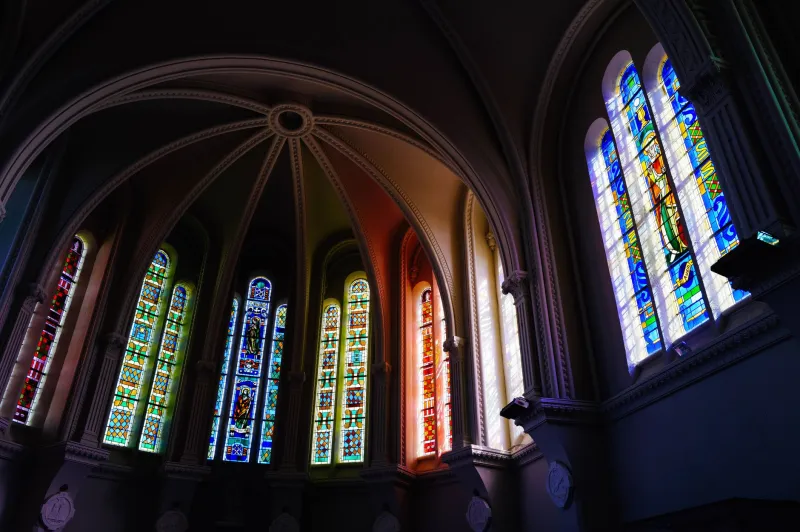
Somewhere between a Renaissance cathedral and a Brooklyn cocktail bar, stained glass had an identity crisis. For most of the 20th century, the medium was essentially synonymous with churches — beautiful, sure, but tucked away in a context that kept it from reaching anyone who wasn't already showing up on Sunday morning. Then something shifted. Call it the social media effect, call it a broader hunger for craft and materiality in a digital world, or call it the inevitable return of something too good to stay niche. Whatever the cause, stained glass is everywhere right now, and the artists making it are doing things with colored light that would genuinely surprise even the most devoted Chartres enthusiast.
At Illums Online, light is our whole thing — the way it moves, the way it transforms a space, the way it makes the mundane feel like something worth stopping for. Stained glass, it turns out, is one of the most powerful light-manipulation tools ever invented. And right now, it's in the middle of a full-blown renaissance.
Why Stained Glass? Why Now?
The timing makes sense when you look at the cultural context. We're living through a moment of intense screen fatigue — people are actively seeking out analog experiences that feel tactile and permanent. Stained glass is about as far from a digital interface as you can get. It requires physical skill, patience, and an intimate understanding of how light behaves at different times of day and in different seasons. The finished product doesn't load, doesn't buffer, and doesn't need a software update. It just glows.
Social media has also played an undeniable role. A well-made stained glass panel in a restaurant window or a music venue bathroom is genuinely viral content — the kind of image that gets saved and reshared because it's visually arresting in a way that a plain white wall simply isn't. Several artists working in the medium today cite Instagram as both a discovery platform and a direct sales channel, with commissions coming in from clients who found them through a single photograph.
"I got a DM from a restaurant owner in Nashville who had seen my work on someone else's feed," says Chicago-based artist Mara Ellison, whose geometric panels have appeared in coffee shops, private residences, and a boutique hotel lobby in the West Loop. "She had no idea I was a real person making real things until she saw that photo. Now I have a two-year waitlist."
 Photo: Mara Ellison, via www.fatih.bel.tr
Mara Ellison, Chicago: Architecture as Collaboration
Ellison came to stained glass through architecture school, where she became fascinated by the way fenestration — the arrangement of windows in a building — could completely transform interior experience. She trained under a traditional glazier in the Czech Republic before returning to Chicago and starting to push the medium in directions her teacher probably hadn't anticipated.
Her work is geometric and precise, drawing on Bauhaus principles and Islamic tilework in equal measure. But what makes it genuinely distinctive is her obsession with the after-dark experience. Most stained glass artists think primarily about daylight — how natural light passing through colored glass animates a space. Ellison designs her panels to be backlit by artificial light at night, creating installations that function almost like living paintings after sunset.
"A window is a two-act piece," she explains. "Daytime is one show. Nighttime, when the light source flips and the panel starts projecting outward instead of inward, is a completely different show. I design for both."
Jordan Vance, New Orleans: Funk, History, and Colored Light
In New Orleans, Jordan Vance is doing something entirely different. His work is rooted in the city's architectural heritage — the elaborate ironwork, the shotgun houses, the jazz club interiors — but filtered through a contemporary lens that incorporates portraiture, narrative, and a color palette that feels more Mardi Gras than medieval.
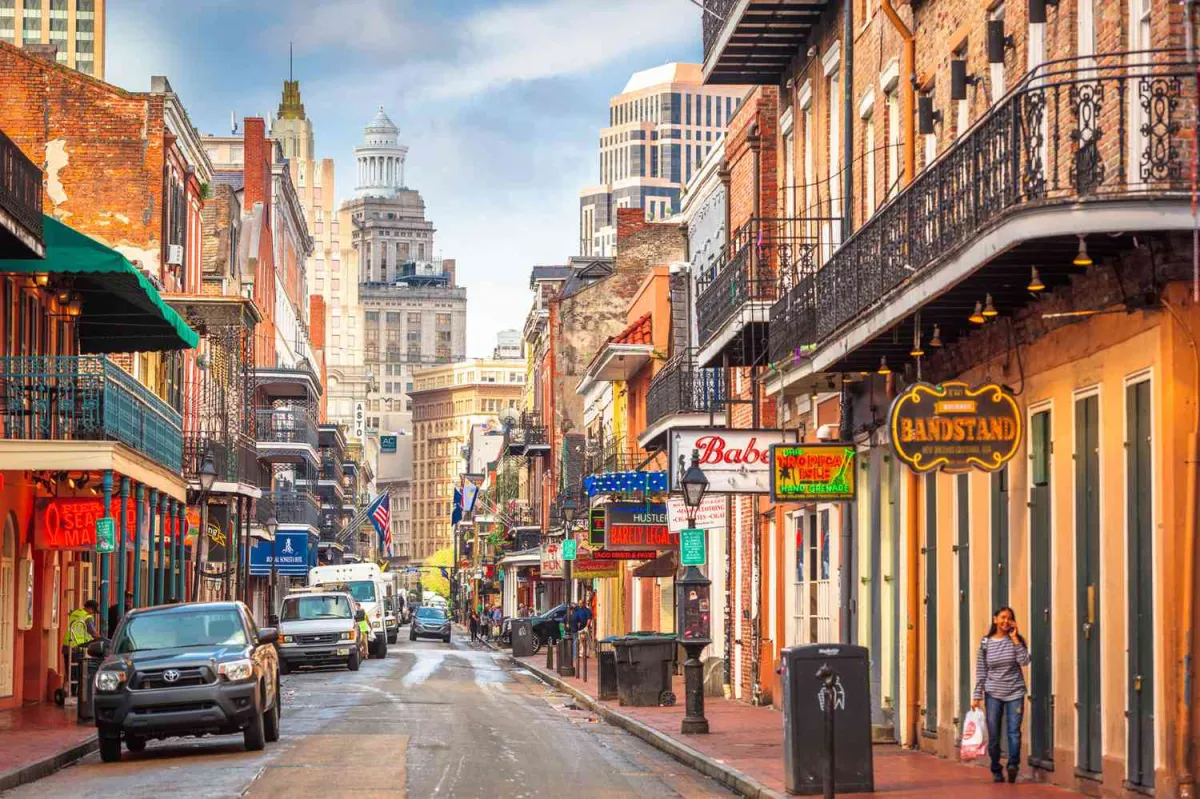 Photo: New Orleans, via www.travelandleisure.com
Vance started making stained glass panels as set decoration for music venues in the Marigny and Bywater neighborhoods, and his reputation grew organically from there. His most celebrated piece is a 12-panel installation in a Tremé bar that depicts local musical legends in a style that blends traditional leaded glass technique with the loose, expressive linework of street art. At night, with the bar's warm interior light flooding through the panels, the effect is extraordinary — the figures seem to glow from within, like they're still performing.
"New Orleans already understands that light is part of the atmosphere," Vance says. "The city runs on atmosphere. I'm just adding another layer to something that's been here for centuries."
Priya Nair, Los Angeles: The Domestic Frontier
While Ellison and Vance work primarily in commercial and hospitality contexts, Los Angeles artist Priya Nair has made the private home her primary canvas. Her commissions range from small decorative transoms to full room-dividing installations in mid-century modern homes where the architecture practically demands something spectacular in the light department.
Nair's aesthetic is botanical and slightly psychedelic — dense arrangements of leaves, flowers, and abstract organic forms in colors that shift dramatically depending on the angle of sunlight. She works almost exclusively in mouth-blown antique glass, which has a texture and depth that machine-made glass simply can't replicate, and she's vocal about why that matters.
"Modern glass is too perfect," she says. "It's flat. Antique glass has bubbles, striations, variations in thickness — all of that stuff catches light in ways that are unpredictable and alive. My clients are paying for something that will never look exactly the same twice."
Nair has also become something of a resource for homeowners interested in commissioning stained glass for the first time. She publishes detailed guides on her website about the process, the typical cost range (expect anywhere from $150 to $400 per square foot for quality custom work, depending on complexity), and how to find a reputable artist or studio.
Felix Huang, Portland: Public Space and Participatory Design
Portland-based Felix Huang approaches stained glass as a public art medium first and foremost. He has completed large-scale installations for transit stations, library branches, and community centers across the Pacific Northwest, and his process involves extensive community engagement — gathering input from neighborhood residents about imagery, color, and symbolism before a single piece of glass is cut.
His most recent project, a series of panels for a light rail station in southeast Portland, took two years from first community meeting to installation. The finished work incorporates imagery drawn from the neighborhood's Japanese American history, its current Vietnamese and Latino communities, and its natural landscape — all rendered in a visual language that is distinctly contemporary but unmistakably indebted to the long history of the medium.
"Stained glass has always been communal," Huang says. "The great medieval windows were made by whole workshops, for whole communities, to be experienced collectively. I'm just trying to honor that tradition in a different context."
How to Find (or Commission) Stained Glass Near You
If this piece has you ready to stop walking past stained glass without really seeing it — or better yet, ready to bring some into your own space — here's where to start.
The Stained Glass Association of America (sgaaonline.com) maintains a directory of member studios and artists organized by region, and it's a solid first stop for finding someone with verifiable credentials. Many cities also have local glass guilds that host open studio events and workshops — a great way to meet artists, see work up close, and get a feel for what the commissioning process actually involves.
For the experience-seeker rather than the collector, historic buildings are the obvious starting point — but don't overlook newer hospitality spaces. Bars, restaurants, and boutique hotels have been commissioning serious stained glass at an impressive rate over the last five years, and a quick search for "stained glass" in your city's local design press will often turn up recent installations worth visiting.
And if you find yourself in front of a great panel after dark — when the light inside the building is spilling out through the glass and the colors are doing something you can't quite photograph accurately — just stop for a minute. That's the whole point. Light becoming art, right there in front of you, no ticket required.