Dawn Chasers: Inside the Obsessive World of Photographers Who Live by Natural Light
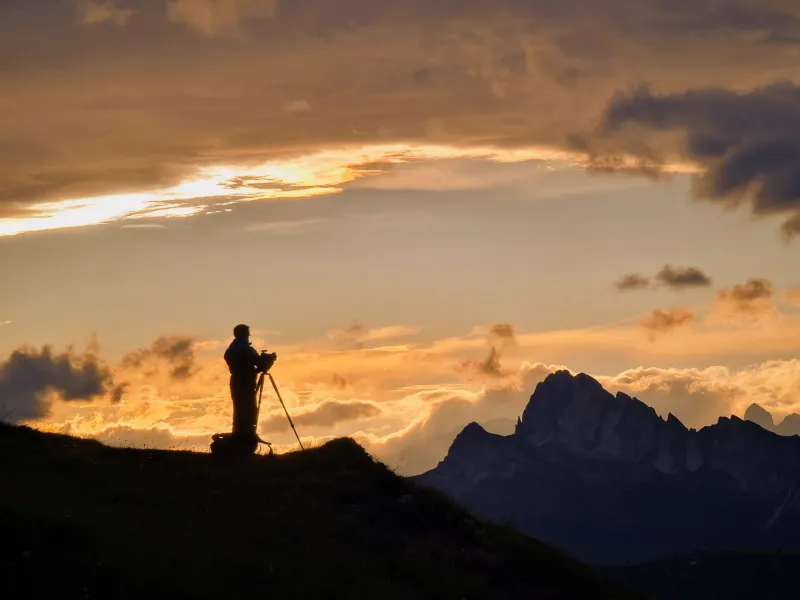
Somewhere on a ridge above Horseshoe Bend, Arizona, a man named Derek Calloway has been standing in the same approximate spot for the better part of three hours. He arrived before 4 a.m. His thermos ran out of coffee around 5. He hasn't moved because the light hasn't done what he needs it to do — not yet. But when it does, when that warm copper glow finally spills across the Colorado River below and turns the canyon walls into something that looks less like geology and more like a painting someone forgot to finish, he'll have maybe ninety seconds to get the shot he's been planning for eight months.
This is the life of a natural light photographer. And if you think it sounds extreme, you haven't met enough of them.
More Than a Hobby, Less Than Madness (Barely)
Across the United States, a loose but fiercely dedicated community of photographers has built their entire routines — travel schedules, sleep cycles, vacation days, even romantic relationships — around the behavior of natural light. Not studio light. Not artificial fill or ring lights or LED panels. The real thing: sunrises, sunsets, alpenglow, bioluminescence, crepuscular rays cutting through forest canopy, and the kind of atmospheric phenomena that only happen when a dozen environmental variables align for about four minutes on a Tuesday in February.
They use apps like PhotoPills and The Photographer's Ephemeris to calculate exactly when and where the sun will rise relative to a specific canyon wall or mountain peak. They study weather models the way traders study market charts. Some of them have driven sixteen hours for a sunrise that got clouded out, turned around, and driven back the following morning.
"People think I'm chasing photographs," says Mara Hendricks, a Colorado-based landscape photographer with nearly 200,000 Instagram followers. "I'm really chasing light. The photograph is just how I prove I was there."
The Firefall Effect and the Magic of the Unmissable Moment
Nothing illustrates this subculture's intensity quite like what happens every February at Yosemite National Park, when the setting sun hits Horsetail Fall at precisely the right angle to make the waterfall appear to glow like molten lava. The so-called Firefall — a reference to an old Yosemite tradition of pushing burning embers off Glacier Point — only works during a narrow window of days, and only when the waterfall is actually running and the sky is clear.
In recent years, the meadow below the fall has drawn hundreds of photographers jostling for position days before the phenomenon peaks. Rangers manage the crowd. Spots along the trail get claimed before dawn. And yet, for the photographers who've been doing this for a decade or more, the circus is almost beside the point. They'll tell you that standing in that meadow, watching a curtain of water turn gold and then orange and then a deep, burning red — that's not something you explain to someone who hasn't seen it. It's experienced.
"The Firefall is the Super Bowl of natural light photography," says James Okafor, a Bay Area-based shooter who has made the pilgrimage six times. "I've gotten the shot twice. The other four years, something went wrong. I'll keep going back."
Gear, Obsession, and the Art of Waiting
The equipment these photographers carry would make a casual hobbyist nervous. Full-frame mirrorless bodies, multiple fast prime lenses, carbon fiber tripods, remote shutter releases, neutral density filters for managing exposure in high-contrast light. Some bring handheld weather stations. A few have started using drones — though many national parks have strict no-fly rules that keep the airspace as pristine as the scenery below it.
But the most important tool, every serious natural light photographer will tell you, isn't gear at all. It's patience. And a very high tolerance for disappointment.
Amy Solis, who photographs the alpenglow phenomenon across the Colorado Rockies — that soft, rosy illumination that clings to high peaks in the minutes after sunset — estimates she has hiked to her shooting locations more than 200 times over six years. Of those trips, she considers maybe thirty of them truly successful.
"Alpenglow is the most beautiful light I've ever seen," she says. "It's also the most unreliable. You can do everything right and the atmosphere just doesn't cooperate. You go home empty and you try not to be bitter about it."
She is, she admits, sometimes a little bitter about it.
How Instagram Changed the Pilgrimage
For most of photography's history, natural light hunting was a solitary or small-group pursuit. Ansel Adams famously worked alone in Yosemite for years, developing an almost meditative relationship with the landscape and its light. The idea of two hundred strangers showing up to photograph the same waterfall on the same morning would have been unthinkable.
Social media changed all of that, and the natural light community has complicated feelings about it.
On one hand, platforms like Instagram and YouTube have created genuine communities where photographers share techniques, location intel, and the kind of emotional support that comes from knowing other people have also driven four hours to watch clouds ruin a sunrise. Apps and online forums have democratized access to information that used to take years of hard-won experience to accumulate.
On the other hand, viral posts have turned once-quiet locations into overcrowded spectacles. The slot canyons of Utah. The lavender fields of Sequim, Washington. That one perfectly positioned lone tree on the Oregon coast. When a location blows up on social media, the experience of photographing it changes fundamentally — and not always for the better.
"There's a tension between sharing what you love and protecting it," says Hendricks. "I've started being more careful about geotagging. Some places deserve to stay a little secret."
Light as Language
What makes natural light photography more than just a technical exercise — what elevates it from hobby to genuine art form — is the way these photographers talk about light as a living, communicative thing. Not something to be captured, but something to be listened to.
At Illums Online, we spend a lot of time thinking about how light shapes human experience, whether that's inside a gallery, across a festival field, or bouncing off the walls of a carefully designed room. Natural light photography sits at a fascinating intersection of all of that — it's art made entirely from the world's original illumination source, with no artificial assist, no post-production trickery beyond what the camera saw.
When Derek Calloway finally gets his shot above Horseshoe Bend — the river going gold, the canyon walls doing that thing where they look like they're generating their own light from within — he doesn't immediately check his screen or celebrate. He just stands there for a minute, watching it happen with his own eyes.
"The camera's already got it," he says. "I want to make sure I do too."
That might be the most honest thing anyone in this subculture has ever said about why they do what they do. The photograph is the proof. The light is the point.