The Invisible Menu: How Restaurant Lighting Is Engineered to Keep You Eating, Drinking, and Coming Back
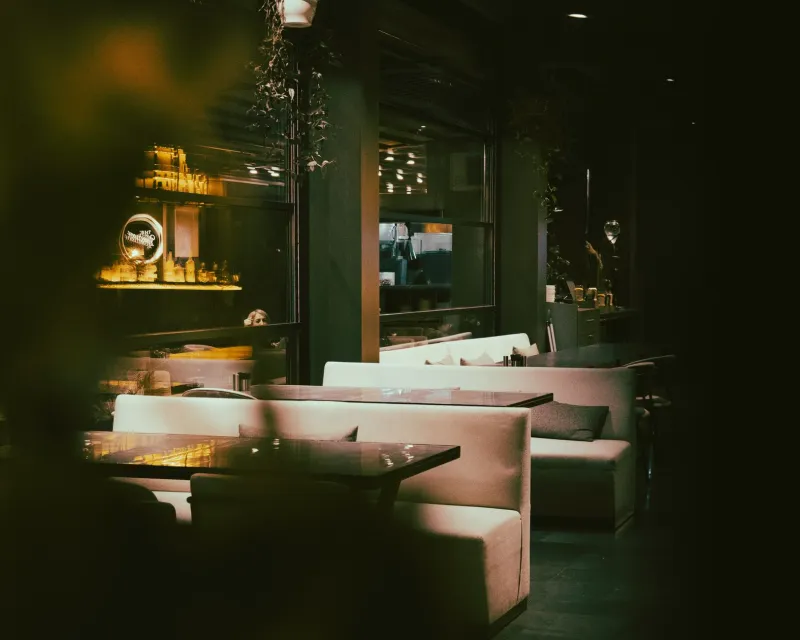
You sit down. The room feels right. You can't quite explain it — the energy is warm, the vibe is relaxed, and somehow you've ordered a second bottle of wine before you even looked at the dessert menu. The food is great, sure. But there's a solid chance the lighting did at least half the heavy lifting.
Restaurant lighting design has quietly become one of the most sophisticated — and deliberately manipulative — disciplines in American hospitality. And the people behind it are very good at making sure you never notice what they're doing.
The Science Behind the Glow
Light isn't just decoration. It's a biological signal. Dr. Mariana Figueiro, a researcher who has spent years studying light's effect on human behavior, puts it plainly: our brains are wired to respond to light intensity and color temperature in ways that go way deeper than aesthetics. Warm, dim light — the kind that hovers in the 2700K to 3000K range on the color temperature scale — triggers a relaxation response. Our pupils dilate slightly. Cortisol levels ease. We lean back in our chairs.
Restaurants figured this out a long time ago, but what's changed in the last decade is the precision with which they're applying that knowledge. LED technology has given designers a level of control that was previously impossible. You can now program a dining room to shift its color temperature by the hour — brighter and cooler during the lunch rush to move tables fast, then slowly warming and dimming as the dinner service deepens into the evening.
"We're not decorating," says James Turrell — no, not that James Turrell, but a hospitality lighting consultant based in Nashville who shares the famous light artist's name and, as it turns out, his obsession with how illumination shapes human experience. "We're writing a script for how people feel. The light tells them when to slow down, when to lean in, when to order another round."
The Big Players Are Paying Serious Attention
Major restaurant groups across the country have started treating lighting design the way they treat menu engineering — as a revenue tool with measurable ROI. The Dinex Group, which operates several of Daniel Boulud's restaurants, has worked with dedicated lighting consultants on almost every recent project. NoMad in New York, Alinea in Chicago, and Republique in Los Angeles all have lighting environments that are as meticulously considered as their plating.
At Atomix in New York — a two-Michelin-star Korean tasting menu experience — the lighting shifts almost imperceptibly throughout the multi-course meal, tracking the emotional arc of the dinner itself. Early courses arrive under slightly brighter, crisper light. By the time you're deep into the savory progression, the room has settled into something that feels almost candlelit, even though there's not a candle in sight. It's all LEDs, all programmable, all intentional.
The effect isn't accidental theater. It's architecture for feeling.
Warm Light, Bigger Tabs
Here's where it gets a little uncomfortable: the research on lighting and spending behavior is pretty unambiguous. A Cornell University study on restaurant environments found that diners in softer, warmer lighting stayed longer, ordered more food, and reported higher satisfaction — even when the food itself was identical to what was served in brighter conditions. A separate analysis of European dining data found that ambient light intensity was one of the strongest predictors of check size, outperforming music tempo and table configuration.
Restaurateurs know this. They've known it for a while. But the sophistication with which they're acting on it has accelerated dramatically.
Lighting designer Liz Larkin, whose firm has worked with restaurant groups in Chicago, Austin, and Miami, describes her process as "emotional choreography." She spends time observing how guests move through a space before she ever specifies a fixture. "Where do people linger? Where do they rush? Where do they feel exposed?" she says. "Light can fix almost all of that. It can make a corner feel intimate instead of isolated. It can make a bar feel like the most exciting place in the room at 10 p.m. even if it felt like a waiting area at 6."
The bar, specifically, is where lighting manipulation gets most aggressive. High-contrast lighting — bright spots over the bottles, darker zones in the seating areas — creates a visual pull that draws guests toward the bar and keeps them there longer. It's the same principle that makes a lit stage irresistible: your eye goes where the light is.
Restaurants Worth Visiting for the Light Alone
If you want to experience hospitality lighting design at its most intentional, a few spots stand out.
Canlis in Seattle has been refining its lighting environment for decades, and the result is a room that somehow manages to feel both grand and deeply intimate. The views of Lake Union do a lot of work, but the way the interior light plays against the glass at night is a masterclass in contrast.
Vespertine in Los Angeles, chef Jordan Kahn's avant-garde tasting room in Culver City, uses light as a core part of its artistic identity. The space — designed with architectural firm Freiss Dryden — treats illumination as a sculptural material. Dining there feels less like eating and more like being inside an installation.
Pappas Bros. Steakhouse in Houston takes the opposite approach: deep, rich, masculine warmth that makes every table feel like a power dinner. The lighting is almost aggressively flattering, which is not an accident. People feel better about themselves under good light. And people who feel good about themselves order the bone-in ribeye.
The Flattery Factor
This brings up something that lighting designers talk about a lot but that rarely makes it into the marketing copy: skin tone rendering. A light source's Color Rendering Index (CRI) measures how accurately it shows colors compared to natural light. High-CRI lighting — 90 and above — makes food look vivid and real. But it also makes people look vivid and real, which means it can be unforgiving.
The best restaurant lighting designers thread a needle: high enough CRI to make the food look spectacular, but with enough warmth in the color temperature to soften skin tones and make everyone at the table look like a slightly better version of themselves. It's subtle flattery, delivered by photons.
"People don't know why they feel good in a well-lit restaurant," Larkin says. "They just know they do. They associate that feeling with the food, with the company, with the place. And they come back."
What to Look for Next Time You're Out
Now that you know what's happening, you can start noticing it. Pay attention to how the lighting changes from the bar to the dining room. Look at whether the light over your table is drawing your eye down to the food or up to the faces around you. Notice if the room gets warmer and darker as the night progresses.
You probably won't be able to unknow any of this. But honestly? Even understanding the mechanics, it still works. Sit down under well-designed warm light, and your shoulders still drop. The conversation still flows. The second bottle still sounds like a good idea.
That's not manipulation. That's craft. And in a world where so much of what surrounds us is designed to extract something from us, there's something almost refreshing about a form of design that, at its best, just makes the night feel a little more like it was always supposed to feel.
Light, after all, is the oldest mood-setter we've got.