Filament Fever: Inside America's Growing Obsession With Collecting Vintage Edison Bulbs
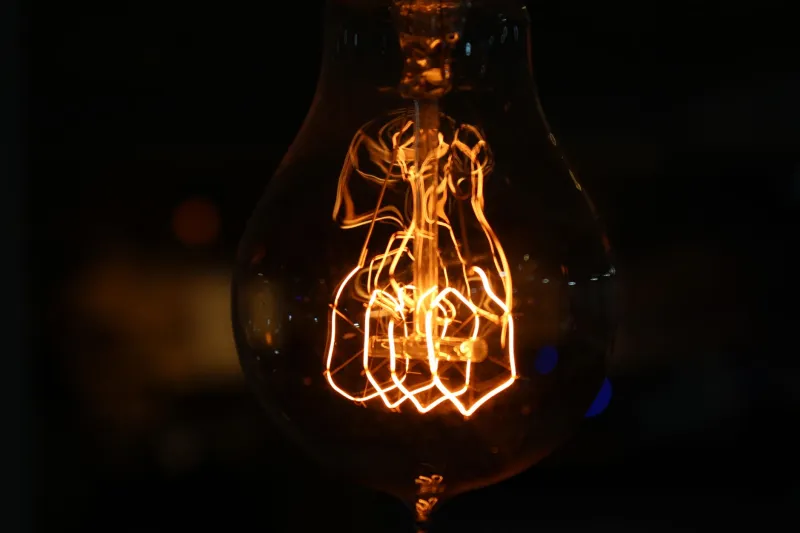
Somewhere in a climate-controlled storage room in Portland, Oregon, a man named Gerald Haas has 847 lightbulbs he's never turned on. Not because they don't work — most of them do, or at least they did once. He won't switch them on because he considers them too precious to burn out. They're artifacts. Investments. Works of art that just happen to produce light.
"People think I'm crazy," Gerald admits, laughing a little. "But then they come over and see them all laid out, and something happens. They get it."
Welcome to the world of Edison bulb collecting — a subculture so niche it barely has a name, yet so active it's driving up prices at estate sales, spawning dedicated online marketplaces, and turning certain rare filament variations into the kind of objects people argue about in auction comment sections at 2 a.m.
From Factory Floor to Design Icon
To understand why a lightbulb becomes collectible, you have to understand what the Edison bulb actually represents. Thomas Edison's incandescent lamp — patented in 1879 — wasn't just a technological breakthrough. It was the moment artificial light stopped being fire and started being design. The warm amber glow, the visible carbon filament looping inside the glass like a tiny glowing sculpture — it was beautiful in a way that nobody planned for.
For most of the 20th century, those qualities were beside the point. Lightbulbs were tools. You bought them at the hardware store, screwed them in, and forgot about them until they died. Then the design world happened.
Sometime in the mid-2000s, exposed Edison bulbs started appearing in restaurants and boutique hotels — first in Brooklyn, then everywhere. The aesthetic was industrial-rustic, warm and nostalgic, the visual equivalent of a mason jar cocktail. By the early 2010s, they were unavoidable. By the late 2010s, some designers were already calling them overexposed.
But for a quieter group of enthusiasts, the trend was just the opening act. What they were after wasn't the reproduction bulbs sold at West Elm. They wanted the real thing.
What Makes a Bulb Worth Collecting
Authentic vintage incandescent bulbs — particularly those manufactured before the widespread adoption of tungsten filaments around 1910 — are genuinely rare. Carbon filament bulbs from the Edison era, Shelby Electric Company lamps, early General Electric specimens, and European imports from the turn of the century can fetch anywhere from $50 to several thousand dollars depending on condition, provenance, and the specific filament pattern inside.
Filament design is a big deal in this world. Squirrel-cage filaments, hairpin loops, spiral configurations — each style has its devotees. Collectors talk about them the way wine people talk about grape varietals: with reverence, with specificity, and with just a little bit of competitive edge.
"The squirrel-cage is the holy grail for a lot of new collectors," says Denise Park, who runs a small online shop out of Nashville focused on pre-1920 American electrical artifacts. "But once you go deeper, you start chasing the really obscure stuff — early Westinghouse, some of the regional manufacturers nobody's heard of. That's where it gets expensive."
Condition matters enormously. A bulb with a perfectly intact filament and original brass base commands a premium. Bulbs that still have their original packaging — fragile cardboard boxes printed with long-defunct company logos — can double or triple in value. And then there's provenance: a bulb pulled from a documented historic building, or one with a paper trail connecting it to a specific factory or era, becomes something closer to a museum piece.
Social Media and the Glow-Up of a Niche
For years, Edison bulb collecting existed mostly in the shadows — pun genuinely intended. Collectors found each other through antique electrical forums, specialized Facebook groups, and the occasional estate sale tip-off. Then Instagram happened.
The visual nature of the hobby turned out to be a perfect fit for social media. A rare carbon filament bulb photographed against a dark background, its looping filament lit from within like a tiny amber sun, is exactly the kind of image that stops a scroll. Accounts dedicated to vintage bulb collections started accumulating followers in the tens of thousands. Hashtags like #edisoncollector and #vintagebulbs became rabbit holes.
"Instagram probably did more for this hobby than anything else in the last 20 years," says Marcus Webb, a collector based in Chicago who documents his finds on his account. "I went from knowing maybe 10 other serious collectors to being in contact with hundreds of them worldwide. And prices went up accordingly."
That last point is both a blessing and a problem. As awareness has grown, so has demand — and supply hasn't kept pace. Rare bulbs that might have sat in an antique mall for months now get snatched up within hours of being listed online. Some collectors grumble about flippers: people who buy low and sell high without any real passion for the objects themselves.
The Reproduction Question
No conversation about Edison bulb culture is complete without addressing the elephant in the room: the reproduction market. Manufacturers in China and the US have been producing Edison-style bulbs for decades, and the quality ranges from convincing to laughably bad. For interior designers and homeowners after the aesthetic, they do the job. For serious collectors, they're beside the point.
But there's a middle ground that's gotten interesting. A handful of small American manufacturers have started producing limited-run reproduction bulbs using period-correct techniques — hand-blown glass, carbon or early tungsten filaments, brass bases made to historical specifications. These aren't meant to fool anyone; they're clearly labeled as reproductions. But they've developed their own collector following, particularly among enthusiasts who want the look and feel of a historic bulb without the fragility and cost.
"I love the real vintage stuff, but I also have a few of the high-end reproductions," Gerald says. "There's craftsmanship in them. They're not the same thing, but they're not nothing, either."
Light as Legacy
What drives someone to collect something as fragile and functionally obsolete as a glass lightbulb? The answers collectors give tend to circle around the same themes: history, beauty, and a specific kind of warmth — both literal and emotional — that modern LED technology hasn't quite managed to replicate.
There's also something poetic about the object itself. A lightbulb is, at its core, a vessel for light. It exists to glow. And yet the most prized specimens in these collections are kept dark, preserved precisely because burning them would mean losing them. The light they contain is potential energy, held in suspension.
For the collectors who've built their lives around these glowing relics, that tension is part of the appeal. Light as artifact. Illumination as inheritance. A filament stretched thin across a century, still intact, still waiting.
Gerald Haas turns off the lights in his storage room and holds one of his oldest bulbs up to the window. The sunlight catches the filament inside, and for a moment, it almost seems to glow on its own.
"That right there," he says quietly. "That's why."