Where Neon Goes to Rest: Inside the Salvage Yards Keeping America's Glow Alive
Where Neon Goes to Rest: Inside the Salvage Yards Keeping America's Glow Alive
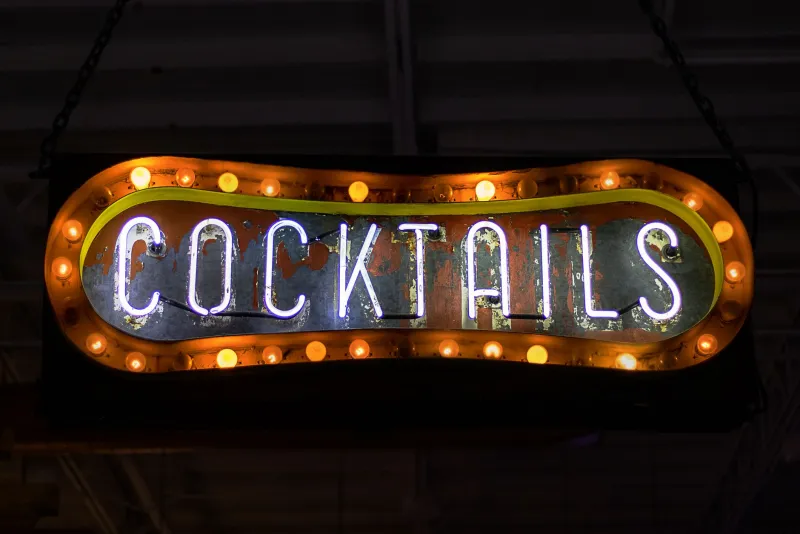
There's a particular kind of magic that happens when you walk into a neon boneyard for the first time. It hits you before your eyes fully adjust — a low, buzzing warmth, like standing inside a sunset that someone forgot to turn off. Stacked against corrugated metal walls and dangling from improvised ceiling rigs, hundreds of vintage signs pulse and flicker in the half-dark. Some are cracked. Some are missing letters. A few are so old they predate the zip code of the town they advertised. All of them are beautiful.
Across the United States, a loose and largely unsung network of salvage yards, private collections, and converted museum spaces has emerged as the final destination for discarded commercial neon. And the people who run them — the collectors, the craftspeople, the obsessives — will tell you the same thing: this isn't a junkyard. It's a library.
The Neon Graveyard That Started It All
If you've spent any time in Las Vegas, you already know the Neon Museum. But even longtime visitors are surprised by the emotional weight of the place. The Boneyard, as the outdoor portion is called, holds more than 200 unrestored signs from the city's commercial past — hulking, hand-lettered relics from casinos, motels, and diners that no longer exist. Walking through it at dusk, when the desert sky turns that particular shade of bruised violet, feels less like a museum visit and more like a séance.
The Neon Museum opened its Boneyard to the public in 2012, but the collection had been quietly growing since 1996, built largely on donations from businesses that had nowhere else to send their old signage. What started as a preservation effort became, almost accidentally, one of the most visited cultural sites in Nevada. Designers, photographers, filmmakers, and just plain curious Americans show up in droves — not to see history in the traditional sense, but to stand inside a specific kind of light that the modern world has largely moved on from.
Ohio's Quiet Obsession
Las Vegas gets the headlines, but some of the most fascinating neon salvage operations are happening in far less glamorous zip codes. In rural Ohio, a handful of collectors have spent decades pulling signs out of demolition dumpsters, barn sales, and shuttered storefronts. One collector in the Columbus area — who asked that his address not be published, for obvious reasons — has amassed over 400 signs in a converted agricultural building on his property. He estimates maybe a third of them still work.
"People think I'm hoarding," he laughs, leaning against a glowing Coca-Cola sign from the early 1960s. "But every one of these things is a document. Someone made it by hand. Someone hung it up on a building and thought, this is going to bring people in. That's not nothing."
He's not wrong. Vintage neon signs are, in a very real sense, folk art — commercial folk art, sure, but hand-crafted objects that required genuine skill to produce. The tube-bending trade that built them is largely gone now, replaced by LED channel letters and digitally printed vinyl. Which is exactly why these salvage collections have started attracting a new kind of visitor: designers and brand consultants looking for visual inspiration that can't be generated by an algorithm.
From Boneyard to Living Room
The design world's appetite for vintage neon has created a secondary economy around these salvage yards that nobody quite anticipated. Small studios and independent dealers now specialize in sourcing, restoring, and reselling vintage signs to homeowners, restaurants, and creative offices willing to pay serious money for the real thing. A fully restored mid-century motel sign can fetch anywhere from a few thousand dollars to well into five figures, depending on its condition, provenance, and how badly a Brooklyn restaurant wants to look like it has history.
Some collectors are ambivalent about this. There's an ongoing tension in the neon salvage community between preservation and commerce — between keeping a sign intact as a cultural artifact and letting it live again in someone's dining room. Most people land somewhere in the middle. "I'd rather see it glowing on somebody's wall than rotting in a field," one Ohio dealer told us. "At least it's still doing something."
Restorers occupy a particularly interesting position in this ecosystem. The craft of neon repair — replacing broken tubes, rewiring transformers, sourcing period-appropriate glass — is painstaking work that demands a specific blend of electrical knowledge and artistic sensitivity. A good restorer doesn't just fix a sign; they have to understand what it was supposed to feel like when it was new, and reverse-engineer that warmth from 60-year-old components.
What the Glow Is Actually Saying
Spend enough time in these spaces and you start to notice something the curators and collectors rarely say out loud: neon signs carry grief. Not in a heavy way, but in the quiet way that all beautiful obsolete things do. These objects were made to be seen, to pull people in off the street, to say we're open, come inside, we're here. And then one day they weren't. The business closed, the sign came down, and something that was designed to communicate got reduced to silence.
What the salvage yards do — and what the people who populate them seem to intuitively understand — is refuse that silence. They keep the current running. They maintain the argument that these objects still have something to say, even if the diner is gone and the motel has been a parking lot for thirty years.
There's something distinctly American about that refusal. We are, as a culture, deeply uncomfortable with letting things go dark. We renovate, we restore, we repurpose. We put old signs in museums and new restaurants and living rooms and call it curation. Sometimes it is. Sometimes it's just love.
Finding Your Own Boneyard
If you've never visited a neon salvage collection, it's worth making the trip. The Neon Museum in Las Vegas is the obvious starting point, and their nighttime tours — when the restored signs are lit against the dark desert sky — are genuinely extraordinary. But don't overlook the smaller operations scattered across the Midwest and South, many of which operate as semi-public collections or hold periodic open days.
Antique malls in former manufacturing cities are another surprisingly rich hunting ground. Cincinnati, Cleveland, Detroit, and St. Louis all have active vintage sign markets, and it's not unusual to stumble across a working piece for a few hundred dollars if you know where to look and don't mind hauling it home.
The glow is out there. You just have to go looking for it.