Golden Hour Gladiators: Meet the Americans Driving Hundreds of Miles to Chase the Perfect Sky
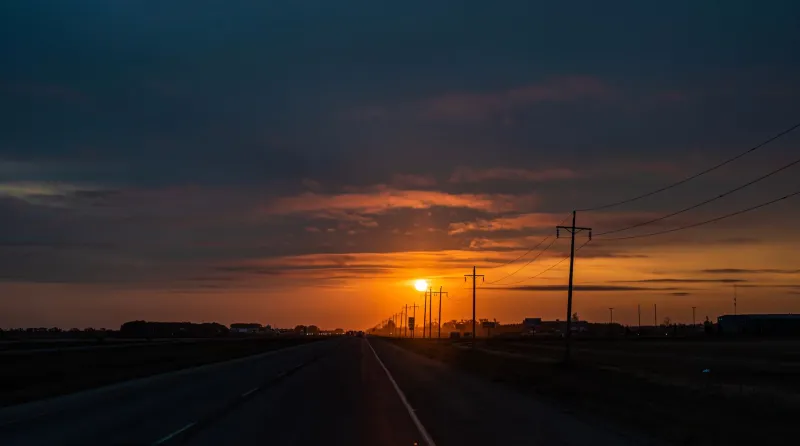
It's 4:47 on a Tuesday afternoon in central Kansas, and Derek Mulvaney hasn't eaten lunch yet. He's too busy watching a satellite loop on his phone, one eye on a band of post-frontal clouds drifting southeast and the other on a group chat that's already fired off 34 messages in the last twenty minutes. Someone in Colorado spotted a dust layer near the Wyoming border. Someone else is calculating drive times from Denver. Derek is in Wichita. He figures if he leaves right now, he can make it to a ridge outside of Pratt with about twelve minutes to spare before the sun drops below the horizon.
He grabs his camera bag and goes.
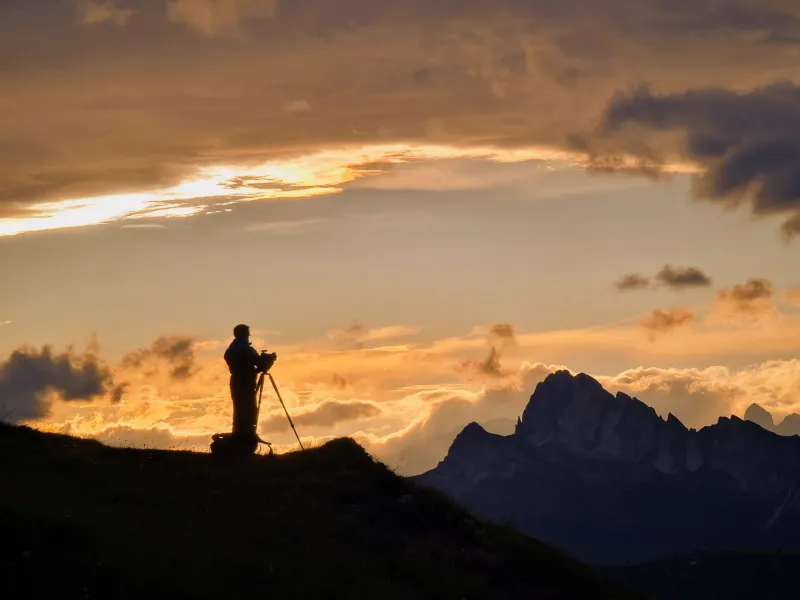
This is what golden hour chasing looks like in 2024 — less serene Instagram fantasy, more adrenaline-fueled scramble. Across the country, a quietly obsessive subculture has formed around the pursuit of extraordinary natural light: the kind that only appears when the atmosphere, the clouds, the dust, the humidity, and the angle of the sun all conspire in exactly the right way at exactly the right moment. These aren't professional photographers waiting for a scheduled shoot. They're hobbyists, retirees, nurses, software engineers, and high school teachers who've essentially turned meteorology into an art form — and each other into friendly rivals.
More Than Just Pretty Skies
Ask any golden hour chaser why they do it, and you'll hear the same word repeated: transcendent. There's something about the quality of light in those final twenty minutes before sunset — or the first twenty after sunrise — that feels fundamentally different from any other visual experience. Photographers have known this forever. But the newer wave of chasers isn't just interested in capturing the light. They're interested in predicting it, and that distinction changes everything.
"Anyone can drive to a scenic overlook and wait," says Priya Nandakumar, a 38-year-old software developer from Austin who runs a Discord server called Goldenseekers with over 2,400 members. "What we do is more like weather forecasting meets landscape scouting. You're reading atmospheric models, checking aerosol indexes, tracking wildfire smoke plumes. You're trying to figure out, before it happens, exactly where the sky is going to do something extraordinary."
The science behind it is genuinely complex. The richest golden hours tend to occur when there's particulate matter in the lower atmosphere — dust, smoke, or pollution — to scatter blue light and amplify reds and oranges. A passing cold front can create dramatic cloud formations that act like natural light sculptures. Volcanic activity halfway around the world can tint American sunsets for weeks. The chasers track all of it.
The Tech Stack of a Sunset Obsessive
If you peek over the shoulder of a serious golden hour chaser, you'll find a surprisingly sophisticated toolkit. Apps like Windy, SkySafari, and Ventusky are staples. Many chasers monitor NOAA's Hazard Mapping System to track smoke and dust plumes. Some have started using NASA's FIRMS (Fire Information for Resource Management System) to get ahead of wildfire smoke that can produce otherworldly amber skies days later.
There are dedicated websites — some built by community members — that aggregate aerosol optical depth data and translate it into plain-language sunset forecasts. A high aerosol reading combined with the right cloud cover and a clean western horizon? That's what chasers call a "stacker" — a sky with multiple layers of drama. Those are the days when group chats go nuclear.
Location scouting is its own obsession. Chasers maintain private spreadsheets of vantage points: ridge lines, lake shores, highway overpasses, grain elevator rooftops (with permission, usually). Google Earth and Photopills help calculate exactly where the sun will set relative to a given landmark on a given date. Some chasers have hundreds of locations catalogued, ranked by horizon clarity, accessibility, and what they call "foreground potential" — the interesting earthbound elements that can anchor a spectacular sky.
Rivalries, Friendships, and the Unwritten Code
Like any subculture built around scarcity — and perfect light is genuinely scarce — golden hour chasing has its social dynamics. There's a loosely observed code around location sharing. Post your spot publicly before the light hits, and you might find a dozen strangers crowding your carefully chosen frame. Share it after? You're a hero who helped people experience something beautiful. Timing is everything, in more ways than one.
Rivalries exist, though most chasers are careful to call them "friendly competitions." There are informal leaderboards in some communities, based on who racks up the most jaw-dropping shots in a season. Dedicated Flickr groups and Instagram hashtags — #goldenhourchasers, #chasethelight — function as both gallery and scorecard. A particularly stunning capture from a difficult location can make someone a minor celebrity in the community for weeks.
But for every competitive edge, there's genuine camaraderie. Derek Mulvaney, the Wichita chaser from our opening, has driven to meet fellow community members he's never seen in person — just because they were both converging on the same promising sky over the Oklahoma panhandle. "You show up at this random pull-off at sunset and there's this other person there with a camera, and you just kind of nod," he says. "You both know. You don't need to explain anything."
What This Says About Us
There's something worth sitting with here. In an era of algorithmically curated visual content — where stunning images are served to us constantly, passively, endlessly — a growing number of Americans are choosing to work for their visual experiences. To study, to drive, to wait, to sometimes fail completely when the clouds don't cooperate or the smoke drifts the wrong direction.
The golden hour chasers are, in their own way, pushing back against the idea that beauty is something you consume. For them, it's something you earn. The light isn't just a backdrop; it's the whole point — a daily reminder that the atmosphere is essentially the world's largest, most unpredictable light installation, and that catching it at its best requires the same mix of preparation, intuition, and dumb luck that any great art demands.
Priya Nandakumar puts it simply: "The sky doesn't care about your schedule. It doesn't care about your follower count. When it decides to do something incredible, you either showed up or you didn't. That's kind of refreshing, honestly."
Derek made it to the ridge outside of Pratt with nine minutes to spare that Tuesday. The sky, he reports, was "absolutely insane" — a layered stack of magenta and deep amber that lasted about four minutes before fading to grey. He posted one shot. It got 340 likes from people who weren't there.
He was already checking the forecast for Thursday.