Your Floodlights, Your Neighbor's Nightmare: The Growing War Over How America Lights Its Yards
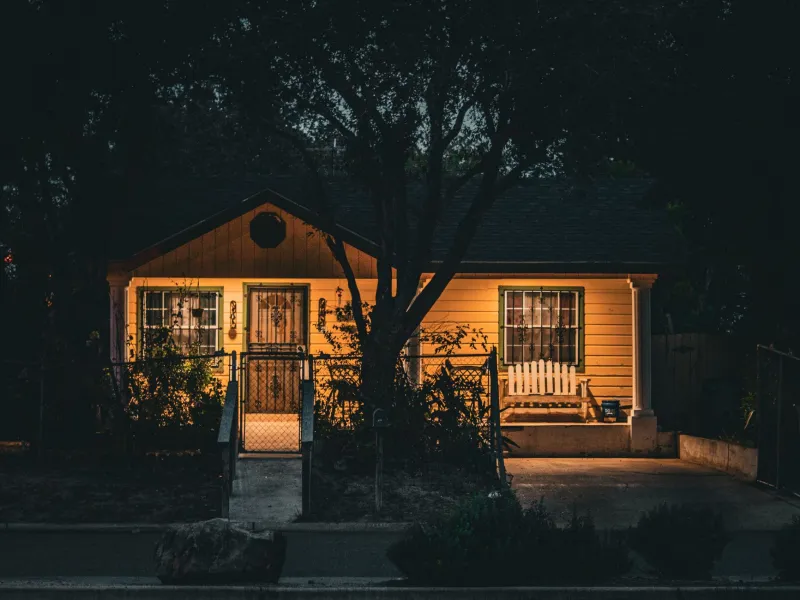
Somewhere in a suburb outside Phoenix, a homeowner just installed six new LED floodlights along their driveway and is extremely pleased about it. The path looks great. The security camera has excellent visibility. The whole property has a polished, intentional look that didn't exist before.
Next door, their neighbor is lying awake at 2 a.m. with light bleeding through the blinds, wondering if it's worth saying something.
This is, in miniature, the great American outdoor lighting debate — and it's happening in neighborhoods from Flagstaff to Fayetteville, from the suburbs of Seattle to the subdivisions of central Florida. On one side: homeowners exercising their creative and practical right to light their property however they see fit. On the other: a growing chorus of scientists, wildlife advocates, amateur astronomers, and just plain tired people arguing that the cumulative effect of all that residential glow is doing real, measurable damage.
The truth, as usual, lives somewhere in the middle — but getting there requires us to take both sides seriously.
The Case for Lighting Up
Let's start with the obvious. Outdoor home lighting isn't a frivolous impulse. Security is a genuine and legitimate concern, and well-lit exteriors do deter certain kinds of opportunistic crime. Landscape lighting extends usable outdoor living space into evening hours. And for a growing number of homeowners, exterior lighting is straight-up creative expression — a way to make a property feel curated and intentional, the way you'd style an interior.
The market reflects this. Smart outdoor lighting systems from brands like Govee, Philips Hue, and Kichler have exploded in the past five years, giving homeowners the ability to color-tune, schedule, and customize their exterior lighting with the same level of control they'd apply to a living room lamp. Landscape lighting designers — yes, that's a real profession, and it's booming — talk about their work in the same terms light artists use: layering, contrast, focal points, mood.
"People are starting to treat their yards the way they treat their interiors," says a Texas-based landscape lighting designer who asked not to be named for this piece. "They want it to look intentional. They want it to feel like a place, not just a lawn."
That's a genuinely appealing idea. The desire to make your home beautiful, to create a welcoming glow, to feel safe in your own driveway — these are human instincts. Nobody should be made to feel bad for wanting them.
The Case Against Flooding the Dark
Here's where it gets complicated. The United States is one of the most light-polluted countries on Earth. According to research published in the journal Science Advances, roughly 99 percent of Americans live under light-polluted skies, and the Milky Way is no longer visible to about one-third of the US population. Residential lighting — not just streetlights and commercial signage, but the cumulative glow of millions of individual homes — is a significant contributor to that problem.
The effects aren't just aesthetic. Light pollution disrupts circadian rhythms in humans, with exposure to artificial light at night linked to sleep disruption, increased risk of certain cancers, and mood disorders. For wildlife, the consequences are often more severe: migratory birds become disoriented by artificial light and die in building collisions at staggering rates; sea turtle hatchlings navigate toward artificial light instead of the ocean; insects — including already-stressed firefly populations — are drawn to and killed by outdoor lights in enormous numbers.
"We tend to think of light pollution as a stargazing problem," says Dr. Elena Vasquez, a researcher affiliated with a university environmental science program in Colorado who studies light's ecological effects. "But it's really a biodiversity problem, a public health problem, and a quality-of-life problem all wrapped up in one. And residential lighting is a piece of that story that doesn't get talked about enough."
There's also the neighbor dimension, which is less dramatic than ecosystem collapse but more immediately personal. Light trespass — when your outdoor lights illuminate your neighbor's property without their consent — is a real source of conflict in American neighborhoods, and it's one that HOAs and local ordinances are increasingly being asked to address.
What Responsible Looks Like
The good news is that this doesn't have to be an all-or-nothing argument. Lighting designers, dark-sky advocates, and environmental researchers have been working toward a set of principles that allow homeowners to light creatively and responsibly — and the overlap between those goals is larger than you might think.
The International Dark-Sky Association (IDA) has developed a residential lighting framework built around a few core ideas. First: light only what needs to be lit, and only when it needs to be lit. Motion-activated fixtures that stay dark until triggered are dramatically less harmful than always-on floods. Second: aim down, not out. Fully shielded fixtures that direct light downward rather than scattering it horizontally reduce both light trespass and sky glow significantly. Third: color temperature matters. Warm-toned LEDs (2700K or below) are less disruptive to human and animal circadian systems than the cool blue-white light that cheaper outdoor LEDs often emit.
"You can have beautiful, effective outdoor lighting and still be a good neighbor to the dark," says Vasquez. "It's really about intention and awareness. Most people who are over-lighting their properties aren't doing it out of malice — they just haven't thought about it."
Some communities are moving beyond individual choice and into policy. Cities like Tucson, Arizona — home to some of the most stringent outdoor lighting ordinances in the country, largely because of the nearby Kitt Peak National Observatory — have shown that coordinated residential lighting standards can meaningfully reduce sky glow without significantly burdening homeowners.
Finding the Balance
Ultimately, the outdoor lighting debate is a proxy for a larger American conversation about individual expression versus collective responsibility. Your floodlights are your business — until they're in your neighbor's bedroom at midnight, or until the cumulative effect of ten million floodlights starts showing up in the data on bird mortality and adolescent sleep disruption.
The most interesting thing about this moment is that the tools for doing it right have never been better. Smart timers, directional fixtures, warm-spectrum LEDs, motion sensors — the technology exists to make outdoor lighting beautiful, functional, and dramatically less harmful. The question is whether homeowners, designers, and local governments can agree to use it.
Light your yard. Make it gorgeous. Just maybe point it down.