Paper, Flame, and Soul: The American Artisans Hand-Crafting Lanterns One at a Time
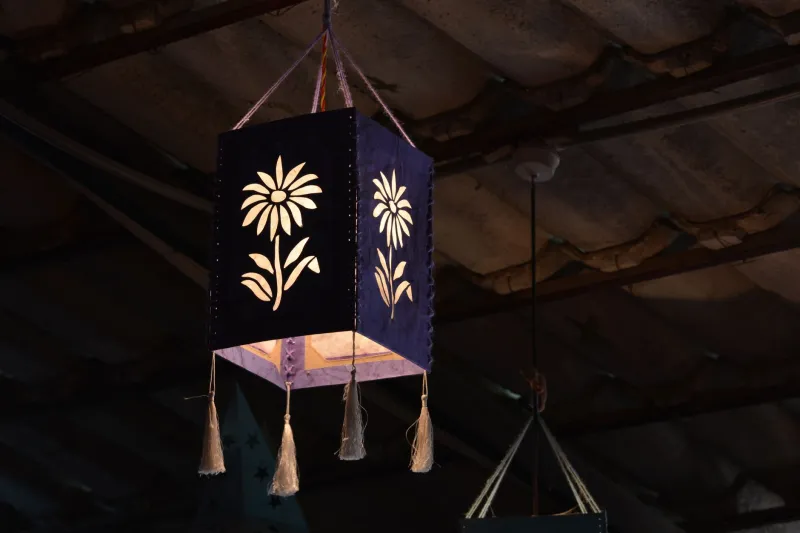
There's a particular kind of quiet that comes with holding a handmade paper lantern. Not the silence of an empty room, but something warmer — the hush of something that took real time and real hands to make. You feel the texture of the paper. You notice the slight irregularity of the frame. And when you light it, the glow is different from anything a factory could produce. It's personal.
That feeling is exactly what a scattered but passionate community of American artisans is betting their craft on. Across the country — from the Pacific Northwest to the Gulf Coast, from New England barn studios to Denver garage workshops — a small revival is quietly underway. Handcrafted paper lanterns, once considered a dying folk art in the United States, are finding new life. And the makers leading that revival are doing it one lantern at a time.
Where the Craft Comes From
American paper lantern making doesn't have a single origin story. It's a patchwork, much like the country itself.
Japanese and Chinese paper lantern traditions arrived on the West Coast with immigrant communities in the 19th century, eventually weaving into local celebrations and neighborhood festivals. Mexican papel picado and farol traditions crossed the southern border and took root in the Southwest. European folk styles — particularly from Germany and Scandinavia — filtered into Midwestern and New England craft communities over generations. What emerged, slowly and without any official declaration, was a distinctly American hybrid: a craft that borrows freely, adapts constantly, and refuses to belong to any single culture.
For decades, that tradition struggled to survive against the flood of cheap, mass-produced imports. Walk through any party supply store or holiday market and you'll find stacks of machine-made paper lanterns at prices no handmade version could match. For a long time, that seemed like the end of the story.
Turns out, it wasn't.
The Makers Keeping It Going
Suki Tanaka-Morris, Portland, Oregon
Suki grew up watching her Japanese-American grandmother fold and paste lanterns every summer for the neighborhood Obon festival. When her grandmother passed, Suki inherited a box of tools, a stack of washi paper, and a hand-written notebook of patterns. She spent three years learning to decode it.
Today, Suki sells her lanterns through a combination of Portland farmers markets and a busy Etsy shop. Her work blends traditional Japanese shoji-style frames with hand-dyed lokta paper from Nepal, creating lanterns that feel both ancient and completely contemporary. "People stop at my table and just stare for a second," she says. "They're trying to figure out what they're looking at. That pause — that's the whole point."
Suki is also one of the more vocal voices pushing back against the mass-market knockoffs. She's started including a small card with every lantern explaining the materials used and the time involved. "A machine-made lantern costs four dollars. Mine costs forty. I need people to understand why."
Carlos Reyes, San Antonio, Texas
Carlos comes at the craft from a completely different direction. His family has made farolitos — small paper bag lanterns traditionally lit with candles — for generations, a practice rooted in Mexican and New Mexican holiday traditions. But Carlos has spent the last decade pushing the form far beyond its folk origins.
His lanterns are architectural. He builds internal bamboo structures, layers translucent papers in multiple colors, and cuts intricate geometric patterns by hand using a swivel blade and a steady nerve. The results look like something between a traditional farolito and a piece of museum-ready sculpture. He sells primarily through local San Antonio art fairs and a small but loyal wholesale account with a design boutique in Austin.
"My grandmother would probably think I've lost my mind," he laughs. "But she'd also like the light they make. The light is still the same."
Ingrid Holst, Minneapolis, Minnesota
Ingrid's entry into lantern making was almost accidental. A graphic designer by training, she started experimenting with paper cutting during a particularly brutal Minnesota winter and fell down a rabbit hole of Scandinavian juleljus traditions — the practice of making decorative paper lanterns for the winter holiday season. What started as a hobby turned into a side business, and then a main business.
Her aesthetic is clean and Nordic: geometric cutouts, natural beeswax paper, simple wooden bases. She's built a following largely through Instagram and a Substack newsletter where she documents her process in detail. "People love watching things get made," she says. "That transparency is part of what makes the handmade thing feel real."
Ingrid also runs occasional workshops, teaching the basics of paper lantern construction to small groups in her Minneapolis studio. Demand, she says, has been surprisingly strong.
Mara Osei-Bonsu, Asheville, North Carolina
Mara is the newest of the group, having started her practice only four years ago, but she's arguably the most experimental. A textile artist by background, she incorporates fabric scraps, pressed botanicals, and recycled materials into her lantern frames, creating objects that feel less like lighting fixtures and more like living things.
Her work sells almost exclusively through word of mouth and local Asheville markets, and she's built a devoted following among the city's design-conscious community. She's also started collaborating with local florists to create lanterns that incorporate dried flowers and herbs — objects meant to be displayed seasonally and then composted. "Light should be part of the cycle," she says. "Not just something you plug in and forget."
The Fight Against Flat-Pack
Every one of these makers will tell you the same thing: the hardest part isn't the craft. It's the education.
Consumers who've grown up buying disposable paper lanterns in bulk for ten dollars a dozen have to be shown — sometimes slowly, sometimes repeatedly — why a handmade version is worth ten times that. The materials are better. The light is warmer. The object will last years instead of one season. And perhaps most importantly, it carries a story.
That story is increasingly the product. In a market flooded with identical, algorithmically optimized goods, the handmade lantern's imperfections are its selling point. The slight variation in the paper's texture. The small irregularities in the bamboo frame. The fact that someone's hands touched every part of it.
Social media has helped. So has the broader cultural drift toward intentional consumption — the growing appetite among American buyers for objects that mean something, that connect to a tradition, that light up a room with more than just lumens.
A Quiet Glow, Getting Brighter
None of these makers are getting rich. Most are supplementing income from other work, at least for now. But all of them describe something that sounds less like a business calculation and more like a calling.
The craft is alive. Quietly, stubbornly, beautifully alive. And every time someone sets a handmade lantern on a windowsill or hangs one from a porch beam and watches it fill with light, the tradition carries forward — a little imperfect, a little irregular, and entirely irreplaceable.