The Original Glow: Why Americans Are Fighting to Save the Firefly Before It Flickers Out
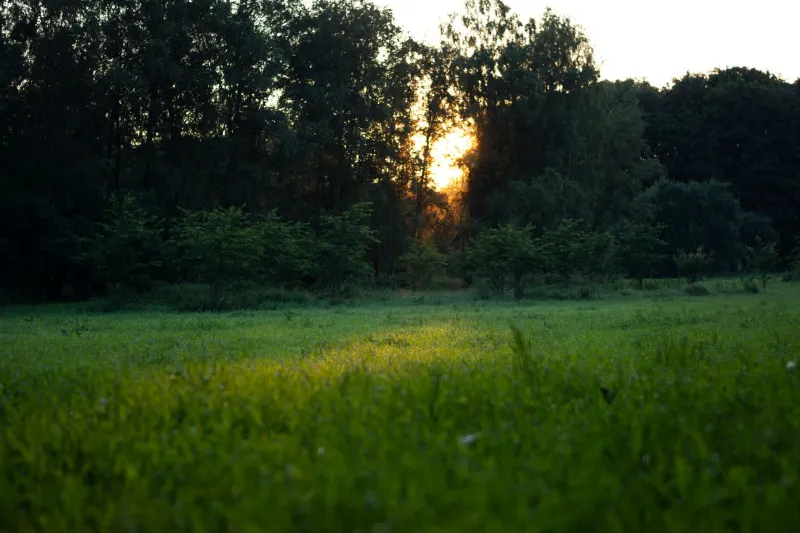
Before neon. Before LED strips. Before anyone thought to hang Edison bulbs on a patio, there were fireflies. Blinking slowly over a humid lawn on a July evening, drifting between the hedges, landing on your arm if you stayed still long enough. For a huge swath of Americans — particularly those who grew up east of the Rockies — that memory is basically hardwired. It's not just nostalgia. It's the first time many of us understood, in our bones, that light could be alive.
Which makes what's happening to firefly populations all the more unsettling.
Across the United States, firefly numbers have been quietly dropping for decades. The causes are layered and frustrating: light pollution drowning out the bioluminescent signals beetles use to find mates, habitat loss shrinking the moist woodland edges and meadow margins they depend on, pesticide use wiping out the soft-bodied larvae in the soil, and climate shifts disrupting the precise seasonal cues that govern their short adult lives. The decline isn't uniform — some species are faring worse than others, some regions harder hit — but the overall trend is unmistakable to anyone paying attention.
A growing community of people is paying very close attention.
The Scientists Mapping the Blink
At Clemson University, researchers have been building some of the most detailed population data on North American firefly species that currently exists — which, frankly, wasn't a high bar to clear. Fireflies are notoriously difficult to study. They live as larvae underground for one to three years, eating earthworms and snails, before emerging as adults for just a few weeks of frantic, luminous courtship. That brief window is the only time most of us ever see them, and it's the only window researchers have to count them.
The Xerces Society for Invertebrate Conservation, a nonprofit that's become one of the loudest institutional voices for firefly protection, published a landmark report in 2020 identifying 18 species of particular concern in the US. Some, like the Bethany Beach firefly in Delaware and the Vernal pool firefly in California, are already considered vulnerable to extinction. Others are simply understudied — blinking in the dark, unknown.
What's driving the urgency now, scientists say, is that fireflies can't just relocate. They're deeply tied to specific microhabitats. A firefly species that evolved in a particular type of Appalachian creek bottom can't simply pick up and move to a different watershed. When those places go, the species go with them.
Why This Is a Light Art Story
Here's the thing: fireflies aren't just ecologically significant. They're the original living light installation — one that took 200 million years to develop and requires zero electricity. The way a field of synchronous fireflies in the Smoky Mountains pulses in coordinated waves isn't just charming. It's a phenomenon that contemporary light artists have literally tried to replicate in galleries, with mixed results. Nature's version is, by any honest measure, better.
For the community of people who care about illuminated art and experience — the designers, the collectors, the photographers who chase golden hour across state lines — fireflies represent something foundational. They're proof that light as a medium predates human creativity by an almost incomprehensible margin. Losing them wouldn't just be an ecological loss. It would be a cultural and aesthetic one.
Citizen Scientists With Mason Jars and Spreadsheets
You don't need a PhD to help. One of the most interesting developments in firefly conservation is how effectively it's mobilized regular people. Firefly Watch, a citizen science program originally launched by Mass Audubon, has trained thousands of volunteers across the country to monitor firefly populations in their own backyards using a simple, standardized protocol. You pick a spot, you watch for 10 minutes at the same time each week during firefly season, and you log what you see. That's it.
The data those volunteers generate is genuinely useful to researchers — it provides geographic coverage that no academic team could afford to replicate on their own. And participants tend to get a little obsessed. There's something about sitting quietly in your yard at dusk, watching and waiting for the first blink, that turns people into committed observers in a way that a lot of citizen science programs struggle to achieve.
Because fireflies are inherently beautiful. The data collection doesn't feel like a chore. It feels like being let in on something.
What Your Yard Can Actually Do
Conservationists are increasingly clear that individual homeowners have real power here, and the changes required aren't dramatic.
Turn off outdoor lights at night during firefly season (roughly late May through August, depending on your region). This one is significant. Artificial light at night disrupts the flash patterns fireflies use to communicate and find mates. Even a porch light left on can reduce mating success in your immediate area. Motion-activated lights, or simply developing the habit of switching things off after 9 p.m. in summer, makes a measurable difference.
Let part of your lawn go. Firefly larvae need moist, leaf-littered soil to survive their years underground. A manicured lawn with no leaf layer and regular pesticide treatment is essentially a dead zone for them. Leaving a corner of your yard a little wild — some leaf litter, some longer grass, maybe a brush pile — creates the microhabitat they need.
Stop using pesticides and lawn chemicals broadly. Firefly larvae are incredibly sensitive to soil chemistry. Systemic pesticides, in particular, can eliminate larval populations without anyone realizing it.
Plant native trees and shrubs. Fireflies are associated with the edges of wooded areas. Native plantings that attract the soft-bodied insects firefly larvae prey on help sustain the food chain they depend on.
None of this requires acreage. People in suburban neighborhoods, even those with modest yards, report meaningful firefly activity when they make these changes. Some urban gardeners have started documenting firefly sightings in community gardens and green corridors in cities — evidence that even small patches of appropriate habitat can matter.
A Memory Worth Protecting
There's a reason firefly imagery saturates American summer culture — from children's books to country songs to the kind of Instagram posts that rack up thousands of saves every June. These insects occupy a specific emotional register that almost nothing else does. They're gentle. They're accessible. They were most Americans' first encounter with the idea that the living world can produce something genuinely, unexpectedly beautiful.
The researchers and backyard conservationists working to protect them understand that this emotional resonance is actually an asset. People will go to real effort to protect something they love. And unlike a lot of conservation causes that feel abstract or geographically distant, fireflies are here — or they were, recently, in the field behind the house where you grew up, in the park down the street, in your grandmother's garden.
The goal isn't to recreate a childhood memory. It's to make sure the next generation gets to have one.
Turn off the porch light. Let the leaves lie where they fall. And on a warm evening in late June, sit outside and wait. If you've done the work, and maybe even if you haven't — yet — something out there might just blink back.