Twenty Minutes of Magic: The Photographers Who've Built Their Whole Lives Around the Blue Hour
Twenty Minutes of Magic: The Photographers Who've Built Their Whole Lives Around the Blue Hour
Set an alarm. Check the weather app. Drive forty-five minutes to a bridge you've already scouted three times. Wait. And then — if the clouds cooperate, if the humidity is low enough, if you've timed it exactly right — watch the sky do something that no filter, no preset, no AI image generator has ever truly replicated.
This is the blue hour. And for a quietly obsessive community of American creatives, it's not just a lighting condition. It's a way of life.
What Actually Is the Blue Hour?
The name is a little misleading — it's not really an hour. Depending on your latitude and the time of year, the blue hour typically lasts somewhere between fifteen and forty minutes, landing in that liminal stretch just after sunset (and again, less dramatically, just before sunrise). During this window, the sun has dropped below the horizon but its light is still scattering through the upper atmosphere at a low angle, producing wavelengths heavily skewed toward blue and violet.
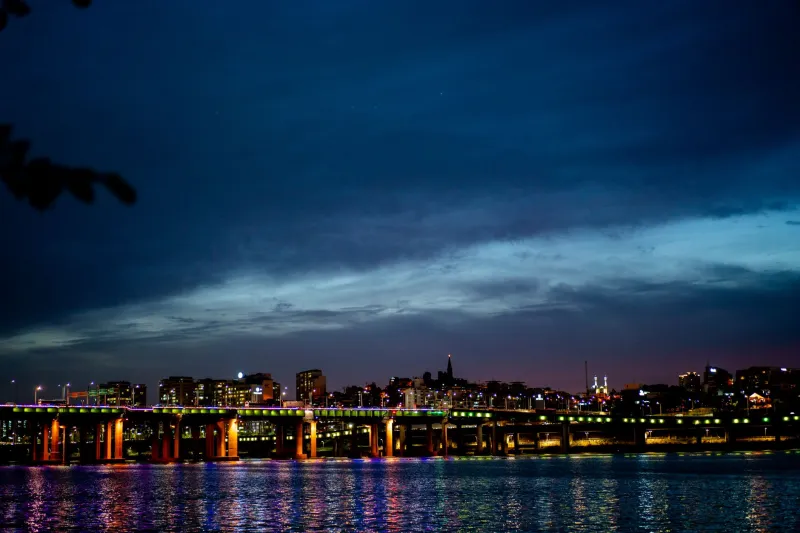
What makes it visually distinct from golden hour — that warm, Instagram-beloved glow just before sunset — is the quality of contrast. During the blue hour, the sky holds enough residual light to read as a deep, luminous blue in long-exposure photography, while the artificial lights of cities, bridges, storefronts, and streetlamps begin asserting themselves against that cool background. The result is a natural balance between ambient and artificial light that photographers spend years chasing.
In color temperature terms, you're looking at roughly 10,000 to 12,000 Kelvin — far cooler than golden hour's 2,000 to 3,000 K range. The human eye processes this as calming, even melancholic. There's science behind the emotional punch: cool blue tones activate different psychological responses than warm ones, often associated with introspection, stillness, and a kind of bittersweet beauty.
The People Who Won't Miss It
Ask Marcus Delray, a landscape photographer based in Portland, Oregon, when he last took a vacation that didn't involve a blue-hour shoot, and he'll laugh. "I've stood on the Burnside Bridge in the rain more times than I can count," he says. "My friends think I have a problem. I think I have a practice."
Delray is part of a growing community of photographers across the US — from the neon-lit streets of Las Vegas to the glassy harbors of Charleston, South Carolina — who structure their entire creative calendars around this window. They use apps like PhotoPills and The Photographer's Ephemeris to calculate precise sunset times and blue-hour onset down to the minute. They scout locations weeks in advance. They show up early and stay until the last usable light is gone.
In Chicago, urban photographer Kezia Omondi has spent the last four years documenting the Loop during the blue hour. "The city looks completely different," she explains. "The glass buildings pick up that blue cast from the sky, but the lobbies and storefronts are already lit up warm. You get this push-pull between cold and warm light that doesn't exist at any other time of day. It's like the city is caught between two moods at once."
That tension — between natural and artificial, between day and night, between what's fading and what's just waking up — is exactly what draws people to it.
Not Just Photographers
The blue hour has devotees well beyond the camera crowd. Plein air painters in cities like Santa Fe and Asheville have been quietly building bodies of work around it for years, working fast to capture a palette that shifts dramatically every few minutes. The challenge, they'll tell you, is part of the appeal. You can't labor over a blue-hour painting. The light won't let you.
Urban explorers — the kind who spend their weekends on rooftops, fire escapes, and elevated parks — treat the blue hour as peak viewing time. In New York City, spots like the Top of the Rock observation deck and the elevated sections of the High Line become unofficial gathering points during twilight, filled with people who may not call themselves photographers but know instinctively that something worth seeing is about to happen.
Even interior designers have started talking about the blue hour as a reference point. A handful of lighting studios on the West Coast have begun developing residential lighting systems specifically designed to mimic the blue-hour balance — warm artificial sources layered against cooler ambient tones — because clients keep describing it as the most beautiful light they've ever experienced in a space.
Where to Experience It Yourself
The blue hour doesn't require a plane ticket or a professional camera. It just requires showing up. Here are a few spots across the US where the conditions are reliably spectacular:
San Francisco, CA — The Embarcadero: The bay, the Bay Bridge lights, and the city skyline create a layered composition that practically photographs itself. The fog, when it rolls in, adds another dimension entirely.
Nashville, TN — John Seigenthaler Pedestrian Bridge: The Cumberland River reflects the bridge lights and downtown glow against a blue sky backdrop that feels almost theatrical. Best in late fall when the air is clear.
New Orleans, LA — Moon Walk along the Mississippi: The combination of the river's wide, reflective surface, the French Quarter's warm ambient glow, and the deep blue sky overhead is something you genuinely have to see in person.
Denver, CO — City Park with a view of the skyline: At altitude, the blue hour hits differently — the sky gets deeper and darker faster, and the clarity of the air means colors stay saturated longer.
Sedona, AZ — Airport Mesa: Trade the city lights for red rock silhouettes. As the sky transitions to blue, the formations turn nearly black against it, and the contrast is surreal.
Why This Light Feels Different
There's a reason people describe the blue hour in almost spiritual terms. Part of it is the brevity — anything that disappears quickly feels more precious. Part of it is the transition itself, that visible shift between states that mirrors something deeply human about endings and beginnings.
But a big part of it is simply the quality of the light. During the blue hour, shadows soften. Harsh contrasts dissolve. The world looks simultaneously more real and more dreamlike. Photographers talk about it the way musicians talk about a particular chord — something that lands emotionally before you can explain it intellectually.
For the people who chase it regularly, missing the blue hour on a clear evening feels like a small loss. Which is why, right now, somewhere in America, someone is checking an app, grabbing their keys, and heading toward a bridge or a rooftop or a riverbank.
They've got about twenty minutes. They won't waste a second of it.